How To Know When You’re Ready To Date Again: 7 Signs It Might Be Time


Figuring out how to know when you’re ready to date again after a breakup can feel confusing and emotionally overwhelming. The dating world moves fast, but your healing journey moves at its own pace.
Jumping into a new relationship before you’re emotionally ready can repeat old patterns, while waiting too long might mean missing genuine connections.
Readiness involves more than just time passing since your past relationships ended. It requires emotional healing, self-awareness, and a genuine desire for connection rather than simply filling a void. Dating readiness is about personal growth and meeting new people from a place of wholeness, not neediness.
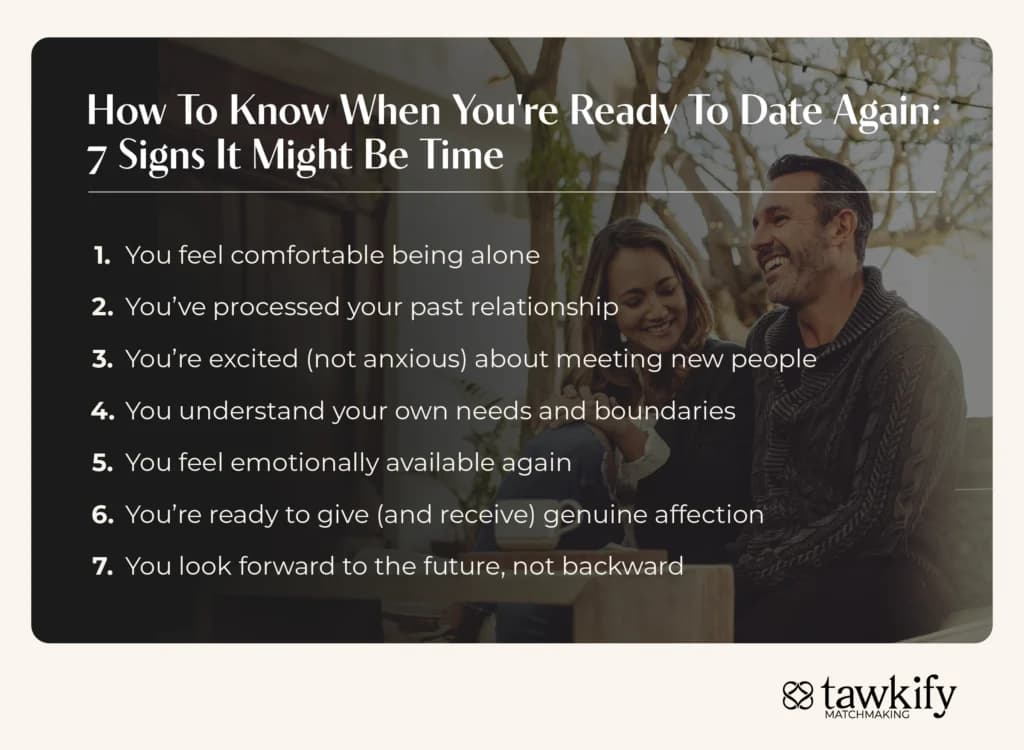
This guide explores seven signs that suggest you might be ready to re-enter the dating world. These aren’t rigid rules, but rather reflections to help you assess your emotional readiness.
Everyone’s journey is different, and only you can determine when the time feels right. The goal is to approach your next relationship with confidence, clarity, and openness to what’s possible.
In this article
- 1. You Feel Comfortable Being Alone
- 2. You’ve Processed Your Past Relationship
- 3. You’re Excited (Not Anxious) About Meeting New People
- 4. You Understand Your Own Needs and Boundaries
- 5. You Feel Emotionally Available Again
- 6. You’re Ready To Give (and Receive) Genuine Affection
- 7. You Look Forward to the Future, Not Backward
- Quiz: Are You Ready To Date Again?
- Moving Forward With Confidence
- FAQs About Dating Readiness
1. You Feel Comfortable Being Alone
One of the clearest signs you’re ready to date again is feeling genuinely content on your own. When you can enjoy your own company without constantly seeking distraction, you’ve reached a level of emotional independence that supports healthy connection.
Being comfortable in solitude means you’ve rediscovered your own interests, established self-care routines, and built a life that feels fulfilling independent of romantic validation. This comfort reduces the risk of entering relationships out of loneliness.
When you’re at peace being alone, you make clearer decisions about potential partners, and recognize your self-worth isn’t tied to relationship status. That is where the most fulfilling and successful relationship stories emerge from.
Letting go of past relationships becomes easier when you’ve invested in yourself. Self-awareness grows through solo activities, hobbies you’ve rekindled, and friendships you’ve strengthened. Personal growth creates a foundation where romantic connection enhances your life rather than defining it.
2. You’ve Processed Your Past Relationship
Processing your previous relationship doesn’t mean forgetting your ex. It means you’ve acknowledged what happened, learned from the experience, and achieved enough perspective and emotional readiness to move forward without emotional baggage.
Closure looks different for everyone. For some, it involves honest conversations. For others, it’s internal work through journaling, therapy, or reflection. The key is understanding what worked, what didn’t, and what patterns you want to avoid in your next relationship.
Working with a relationship coach can accelerate this processing. Professional guidance helps you identify blind spots and develop healthier approaches to connection.
You know you’ve processed your last relationship when you can discuss it without intense emotion, when you’ve stopped obsessively rehashing what went wrong, and when you feel genuinely grateful for the lessons learned. Your mental health improves as you let go of resentment and accept your part in letting go.
3. You’re Excited (Not Anxious) About Meeting New People
The emotional tone you bring to dating reveals a lot about your readiness. Genuine excitement about meeting new people and exploring new experiences signals that you’ve healed enough to approach connection with optimism rather than fear.
Excitement looks like curiosity about who you might meet, openness to different types of potential partners, and hopefulness about what’s possible.
Contrast this with anxiety-driven dating, where the thought of putting yourself out there triggers dread or the urge to avoid it entirely. If you’re forcing yourself into the dating world because you think you “should” be over your ex, that anxiety indicates you need more time.
Healthy boundaries and strong self-esteem support this excitement. When you trust yourself to recognize people who align with your values, dating feels like an adventure rather than a minefield.
4. You Understand Your Own Needs and Boundaries
Clarity around your personal needs, communication styles, and deal-breakers supports healthier relationships. Once you understand what you require from a partner and what behaviors you won’t tolerate, you’re less likely to repeat patterns that didn’t serve you before.
Healthy boundaries include knowing your attachment style (whether you tend toward anxious, avoidant, or secure attachment), recognizing trust issues that need addressing, and communicating expectations clearly. Self-awareness helps you identify what triggered conflicts in past relationships and what you need to feel emotionally safe.
Examples of healthy boundaries include requiring consistent communication, expecting emotional availability from partners, and being clear about your relationship timeline and goals.
When you can articulate your own needs without guilt and respect when others do the same, you’re demonstrating the emotional readiness necessary for meaningful connection.
5. You Feel Emotionally Available Again
Emotional availability means being open to vulnerability, empathy, and shared connection. It’s the capacity to let someone in without walls built from past hurt, and the willingness to show up authentically even when it feels scary.
Signs you’re emotionally available include being able to discuss your feelings openly, listening to others without judgment, and trusting yourself enough to trust others again. You’ve rebuilt confidence in your ability to navigate relationships and recognize red flags early without becoming cynical about love itself.
Trust issues from past relationships don’t disappear overnight, but emotional readiness means you’ve worked through enough of them to give someone new a fair chance. Your self-esteem is stable enough that you’re not seeking validation through romantic attention.
You understand your attachment style and can recognize when old patterns are influencing new connections. Healthy relationships require this foundation of emotional availability.
When you’re looking for a relationship, there’s no comparison
Tired of swiping with no real connections? Tawkify takes a fresh approach to the process. With handpicked matches tailored just for you and personalized introductions, we do the work so you can focus on what matters — meaningful connections.
- 80% of people find success with Tawkify
- 3 Million+ relationship-ready singles
- 200,000 Successful connections and counting

6. You’re Ready To Give (and Receive) Genuine Affection
Readiness involves reciprocal energy. You’re not chasing validation or avoiding intimacy, but genuinely open to both giving and receiving affection. This balance comes from emotional stability and confidence in your self-worth.
Authentic affection flows naturally when you’re not trying to prove something or protect yourself from hurt. Understanding your love language, and being curious about a potential partner’s language, helps foster mutual connection. You’re excited about the possibility of finding the right person but not desperate to force connection where it doesn’t exist.
In the dating scene, this readiness shows up as genuine interest in getting to know people, comfort with reciprocal effort, and the ability to be vulnerable without losing yourself.
Personal growth has taught you that healthy relationships enhance your life rather than consume it. When you can offer affection freely while maintaining your sense of self, you’re approaching new relationships from a place of strength.
7. You Look Forward to the Future, Not Backward
Optimism about what’s ahead rather than nostalgia for the past signals emotional readiness. When you view your next relationship as exploration rather than replacement, you’re approaching dating with a healthy perspective.
Looking forward means you’ve made peace with past relationships and are genuinely curious about what kind of new partner might align with your current goals. You’re not trying to recreate what you lost or prove something to your ex. Your mental health has improved to the point where you can imagine future relationships without fear or comparison.
Self-awareness helps you recognize what you’ve learned and what you want differently. Personal growth transforms how you approach connection. The right person for your next chapter might look nothing like partners from your past, and you’re open to that possibility.
Quiz: Are You Ready To Date Again?
Still unsure about your emotional readiness? This quick checklist helps you evaluate where you stand. The more “yes” responses you have, the more prepared you likely are to re-enter the dating world with confidence.
Readiness Checklist:
- ☐ I feel content and fulfilled being alone
- ☐ I’ve made peace with my last relationship and learned from it
- ☐ I’m genuinely excited (not anxious) about meeting new people
- ☐ I understand my own needs and can communicate healthy boundaries
- ☐ I feel emotionally available and ready to be vulnerable again
- ☐ I’m ready to give and receive affection without chasing validation
- ☐ I look forward to the future rather than dwelling on the past
If you answered “yes” to most of these, you’re likely in a strong position to explore new experiences and potential partners in the dating pool.
If several responses were “no” or “maybe,” consider giving yourself more time for self-awareness and healing. There’s no rush, and entering the dating world when you’re truly ready leads to healthier relationships.
Moving Forward With Confidence
Dating readiness stems from self-respect, healing, and openness, not arbitrary timelines. The signs outlined here serve as guideposts for reflection, but only you can determine when the moment feels right. Trust your instincts and move at your own pace.
When you do feel ready, seek supportive connections with emotionally intelligent potential partners who share your values. The dating world can feel overwhelming, especially if you’ve been out of it for a while. Remember that healthy relationships are built on the foundation of two whole people choosing each other, not two halves trying to become complete.
Ready to explore connections with intention and support? Discover how Tawkify creates meaningful matches through personalized matchmaking.
FAQs About Dating Readiness
Everyone’s journey back to dating looks different, and it’s natural to have questions about timing, emotional readiness, and what healthy re-entry looks like.
These answers address common concerns while emphasizing that your personal experience and healing timeline are unique.
How long after a breakup should you start dating again?
There’s no universal timeframe for how long after a breakup you should wait before dating again. Some people need months or even years to heal, while others feel ready sooner. The focus should be on emotional healing and readiness, rather than a set number of weeks or months.
Ask yourself the self-reflection questions throughout this article: Do you feel comfortable alone? Have you processed what happened? Are you excited rather than anxious about meeting someone new?
If you’re uncertain about your readiness, consider working with a relationship coach who can provide professional guidance tailored to your well-being. Rushing back into dating before you’ve healed often leads to repeating old patterns or hurting yourself and others unintentionally.
Is it normal that texting slows down after a great first date?
Yes, it’s completely normal for communication patterns to fluctuate after early dates. People have different texting habits, work schedules, and comfort levels with digital communication. What feels like “slowing down” to one person might feel perfectly normal to another.
Rather than overanalyzing text frequency, focus on the quality of in-person connection and overall emotional alignment. Healthy relationships develop through consistent effort across all forms of communication, not just texting.
What is the 3-3-3 rule for dating?
The 3-3-3 rule is a reflection guide where you check in with yourself at three milestones: after three dates, after three weeks, and after three months. Each checkpoint helps you assess different aspects of connection and prevents rushing into commitment without emotional awareness.
- After three dates: Gauge whether there’s genuine mutual attraction or just politeness. Are you both showing interest, or is one person carrying the conversation?
- After three weeks: Evaluate whether they’re consistent and still showing interest. Has the initial excitement maintained momentum, or has communication dropped off?
- After three months: Reflect on whether this connection feels meaningful and sustainable. Do your values align? Can you envision a future together?
These self-check-ins encourage healthy boundaries and emotional readiness throughout the early stages of a new relationship. They’re guideposts for reflection, not rigid dating rules that everyone must follow.
What is the 7-7-7 rule in dating?
The 7-7-7 rule is a relationship maintenance guideline suggesting a date night every seven days, a weekend getaway every seven weeks, and a kid-free vacation every seven months. This rule for spending time together supports ongoing connection, balance, and intimacy for couples by ensuring regular quality time together.
While the 7-7-7 rule is designed for established relationships rather than early dating, it highlights an important principle: Healthy relationships require intentional effort and dedicated time. In the dating world, this translates to consistent communication, regular in-person dates, and prioritizing connection even when life gets busy.